Strategic Data Partner

Hi, I'm
Barbara.
Decision Clarity Through Data.

"Helping mission-driven organizations understand what their data is actually saying."

I don't start with dashboards, I start with the decisions those dashboards need to support.

Barbara Virsik
Chicago, IL

01 — About

My Journey to Data

I'm drawn to patterns, clean system design, and building data tools that help people make better decisions with clarity and confidence.

My relationship with math and data started early. On weekends, my dad would sit down with me and have me derive formulas and concepts from scratch — something I wasn't always thrilled about at the time. Looking back, I'm incredibly grateful for those foundational moments. They shaped how I think: not just learning what works, but understanding why and how it works at a fundamental level.

This curiosity led me to study Mathematics at the University of Waterloo, where I leaned deeper into first principles thinking and problem solving. During that time, I discovered data science as a natural intersection of my strengths: technical rigor, business intuition, and translating complexity into meaningful, actionable stories. What started as internships quickly became a clear direction.


The Alps

In my most recent role, I gravitated toward data architecture and systems thinking: designing semantic models and building end-to-end data solutions across Sales, Marketing, and CX. I helped stand up the Marketing Analytics function from 0 to 1, creating foundational tools and dashboards that informed marketing strategy and campaign planning.

At my core, I turn patterns into insight and chaos into clarity, whether through deep-dive analysis, scalable data models, or tools that help teams confidently act on their data.

Outside of work, I'm naturally drawn to understanding how things work and how patterns emerge across even the most unexpected domains. I also love exploring well-crafted stories through books and movies. My favorite movie genre is "based on real life events."

Barbara

02 — My Why

Most data problems aren't actually data problems —
they're definition and assumption problems.

The biggest gaps rarely come from missing dashboards, but from misaligned understanding of what metrics actually mean and how data is captured in practice. I focus on getting to the root of those gaps by working from the lowest level of data and directly with the people closest to it. That's where the real friction and the real opportunity usually lies.

My approach

I don't start with dashboards, I start with the decisions they need to support. My work focuses on bridging the gap between how businesses think their data works and how it actually behaves in practice. By going to the lowest grain of the data and working closely with stakeholders and system users, I uncover misaligned definitions, hidden assumptions, and structural gaps. These are the kinds of issues that quietly cause data projects to fail adoption or lead to decisions based on skewed reporting.

🎯
Project Goal
What decision does this serve?
📋
Metric Specs & Requirements
Definitions, grain, assumptions
💬
Stakeholder Feedback
Align before building
🔨
Build
With clarity, not assumptions
🎤
Demo
Show, test, refine together
🔄
Rollout & Iteration
Built to last and evolve

My top 3 observations — and how I solve them

01 / Definition Gap

Misaligned Metric Definitions

"I thought sales by order date meant when customers clicked 'order', not when it shipped from the warehouse."
"Our win rate is quotes won divided by quotes open… or is it quotes won vs. total quotes received?"

These misunderstandings are incredibly common and often go unnoticed until trust in the data starts to break down.

I always start by understanding the purpose of the metric. From there, I work backwards to define it clearly, align on assumptions, and document it with concrete examples that stakeholders can actually reference.

02 / Purpose Gap

Unclear Project Purpose

"We need campaign metrics to see how our marketing campaigns did."

At first glance, this sounds straightforward. But without a clear goal, the project quickly becomes unfocused. Without a clear purpose, a data project turns into a merry-go-round.

I start by asking: what are you trying to do with this data? What decision are you trying to make? What initially sounds like engagement metrics might come down to something specific, like tracking promo code sales or campaign-driven revenue.

03 / Scope Creep

Conflicting Perspectives

"Let's track Wait Time differently! Let's exclude IVR and focus on queue averages instead…"

When stakeholders with different responsibilities get involved, projects quickly become overloaded with competing definitions. You end up trying to make one dashboard answer fundamentally different questions.

You can't make one steak rare, well-done, and vegan at the same time. I protect clarity: one data view, one clear goal. Separate, well-defined views for separate stakeholder needs.

03 — How I Help

How I Help Teams Think With Data

I work with teams to bring clarity to important business questions, operational reporting, and decision-making systems. My work usually falls into two areas:

🔍

Strategic Analytical Deep Dives

When leadership teams need to deeply understand what is happening in the business and why.

Examples of questions I investigate
  • Why is a customer segment declining in sales?
  • Are web and non-web customers behaving differently?
  • Which opportunities are hidden inside quoting behavior?
  • Which operational bottlenecks are impacting growth?
  • Which product categories show strong demand but weak conversion?
  • What patterns emerge when customers are grouped by behavior?
  • What is actually driving changes in performance?
  • What drives retention and attrition in customers?
This work often involves
  • stakeholder discovery,
  • analytical investigation,
  • root cause analysis,
  • data storytelling,
  • and executive-ready insights & recommendations.
📊

Metric Clarity, Decision Systems & Dashboards

Helping teams define and structure reporting systems they can actually trust and use.

Common needs
  • KPI definition and alignment
  • metric audits
  • reporting layer & dashboard design
  • operational workflow translation into reporting
  • decision-support systems
Examples
  • Marketing campaign dashboard to track email campaigns
  • E-commerce health dashboards to provide visibility into funnel health
  • Quote executive dashboard to provide quote conversion visibility
  • Quote operational dashboard for sales teams to track pipelines
  • CX dashboards to enable supervisors to track team activity and workload
  • Call center metric specs
  • Framework for effective call metrics: three layers of call center analytics

I focus on ensuring that metrics reflect operational reality and support confident decision-making, not confusion.

I start with understanding the need. I work closely with stakeholders to uncover what decisions need to be made, how the business actually operates and what assumptions currently exist.

04 — Work

Selected Projects

Case Study · Apr 2026

The Job Market
Paradox

The Job Market Paradox
Data Deep Dive

Why Applying Has Never Been Easier And Getting Hired Has Never Been Harder

A data-driven case study exploring how digitization, ATS systems, and rising application volume have reshaped modern hiring dynamics in the U.S. labor market. Uses JOLTS data from the Bureau of Labor Statistics alongside LinkedIn membership as a proxy for the shift to digital recruiting.

JOLTS / BLS DataTrend AnalysisLabor MarketData StorytellingSystems Thinking
Read the full case study →

Data Architecture · May 2026

The Three Layers
of Call Metrics

The Three Layers of Call Metrics
Data Architecture

How I Structure Call Center Analytics for Optimal Clarity

A framework for separating call center metrics into three distinct analytical layers: customer experience (call-level), operational performance (queue-level), and agent effectiveness (agent-level). The goal is to ensure every metric answers a clear business question at the correct grain.

Semantic ModelingCall Center AnalyticsMetric DesignData GrainCustomer Experience
Read the full framework →

Data Architecture · In Progress

Empathetic
Recommendation
Systems

Empathetic Recommendation Systems
Data Architecture

A Humane Movie Recommender — Exploring What It Means to Recommend Well

A recommendation system that acknowledges and counteracts recursive narrowing. Implementing latent preference modeling via Matrix Factorization. A human-centered recommendation design using the MovieLens 25M dataset. The question of what it actually means to recommend in a way that maintains exploration and novelty in a world of recursively narrowing systems.

MovieLens 25MCollaborative FilteringLatent Preference ModelingHuman-Centered DesignRecommendation Systems

✍️ First technical write-up coming soon

📊

Coming soon

05 — Working style

How I Work Best

⚡ What energizes me

🎯

Accountability & Ownership

Taking full ownership of outcomes, starting from a clear purpose rather than a checklist of requests. I do my best work when I'm trusted to see something through end to end.

🏗️

Long-term Thinking

I genuinely enjoy building scalable, thoughtful solutions that support future needs. Quick ad-hoc fixes or short-term workarounds tend to drain my energy.

🧭

Mission-Driven Clarity

I do my best work when I understand the clear mission and purpose of a company. Knowing the broader direction of the organization drives the most effective prioritization for teams and individuals. The "why" of the org cannot be an afterthought.

📖

Storytelling

Crafting compelling narratives that take others on a journey, helping them understand what the data is really saying and why it matters.

🪫 What drains me

🌀

Constant Shifting Priorities Without Context

When direction changes rapidly and nobody explains why, it becomes impossible to prioritize thoughtfully. Context is everything. Without it, effort gets scattered and nothing gets done well.

Unclear Ownership or Decision Rights

Work stalls when nobody is sure who has the authority to decide. I thrive with clear accountability structures where ownership is explicit and respected.

📦

Building Outputs Without Defined Decisions

Outputs need to serve a clear decision. When deliverables exist for their own sake — dashboards nobody consults, reports nobody reads — it's a signal that purpose was never defined upstream.

🙈

Environments That Hide Mistakes

When teams can't openly discuss what went wrong, they can't fix what matters. The most important decisions often come out of honest conversations about failure. Cultures that suppress those conversations prevent real growth.


06 — Writing

Blog

Coming soon

Why Your Metric Definition Is Probably Wrong

The quiet assumption that breaks dashboards and trust simultaneously.

Coming soon

Building Marketing Analytics From 0 to 1

What I learned standing up a function from scratch — and what I'd do differently.


07 — Recommendations

Books & Movies I Love

Start with Why

Start with Why

Simon Sinek

The Infinite Game

The Infinite Game

Simon Sinek

The Big 5 for Life

The Big 5 for Life

John Strelecky

The Cafe on the Edge of the World

The Cafe on the Edge of the World

John Strelecky

The Mom Test

The Mom Test

Rob Fitzpatrick

Dare to Be Naive

Dare to Be Naive

Joshua Berry

Be Useful

Be Useful

Arnold Schwarzenegger

The Power of Now

The Power of Now

Eckhart Tolle

The Art of Statistics

The Art of Statistics

David Spiegelhalter

Becoming

Becoming

Michelle Obama

The Light We Carry

The Light We Carry

Michelle Obama

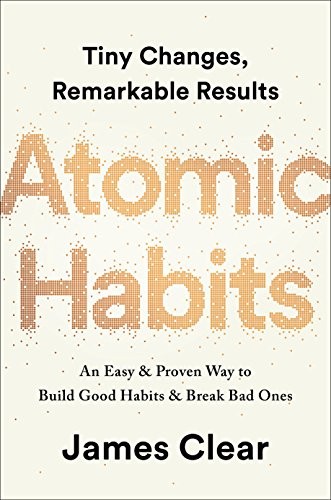
Atomic Habits

Atomic Habits

James Clear

08 — Let's connect

Want to work
together? Let's talk.

I'm open to data consulting, full-time roles, and interesting collaborations. It starts with a conversation.